WHY TPF IS SUPPORTING THIS
Heritage buildings, protected or not, anchor local identity. Preserving and retrofitting them, rather than demolishing and rebuilding, is also one of the most direct ways to cut the emissions of construction, a case the Foundation has made with partners like the CORRECTIV and the HouseEurope! initiative. Yet existing heritage preservation rules are often based on the stable climate conditions of the last century and increasingly cited as an obstacle preventing necessary interventions that would make historic buildings and sites future-proof. That tension is only growing with increasingly severe global warming. Extreme weather events threaten the stability, surfaces, and materials of historic buildings, along with the trees, beds, and waterways of historic gardens, and traditional conservation methods with their long renovation cycles were not designed for it.
THREE HISTORIC MONUMENTS AS LABORATORIES
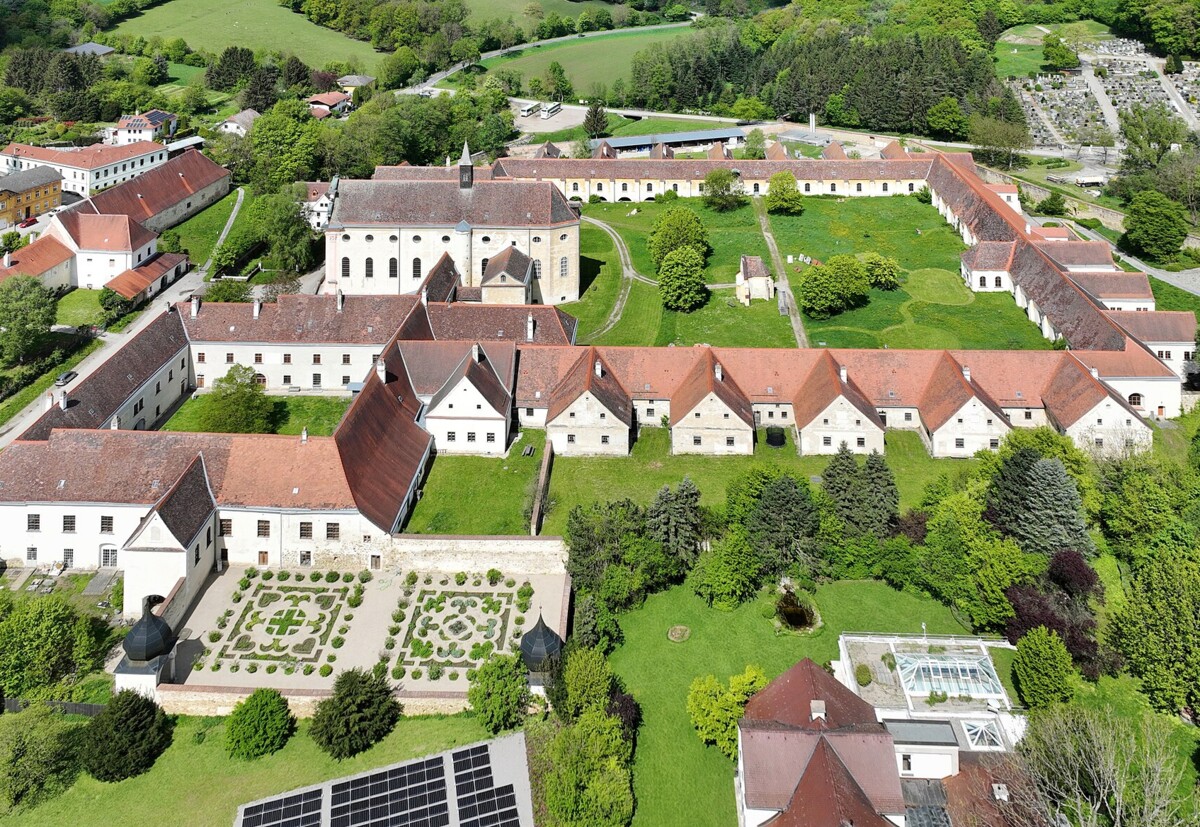
Between 2024 and 2026, the TU Dortmund project ran three Denkmallabore, each hosted inside a single monument so that students and experts could work hands-on with what climate change means for conservation. The settings were deliberately different: Kartause Mauerbach (the former Charterhouse of Mauerbach) near Vienna, Kokerei Hansa (the Hansa coking plant) in Dortmund, and the Fürst-Pückler-Park (Prince Pückler's park) in Branitz near Cottbus. Over three years, about 120 people took part in the project, including students from 16 German-speaking universities alongside more than 40 experts from research and skilled trades. The project was also joined by writers and artists adding film, workshop, and writing formats. Heritage conservation has long belonged to art historians and architects, working apart from nature and environmental protection. The labs set out to bring those fields back together.
FROM BROAD STRATEGY TO CONCRETE MEASURES
The forthcoming book, with the working title “Erbe erhalten – Zukunft gestalten. Denkmallabore zu Kulturerbe und Klimawandel” (“Preserving Heritage, Shaping the Future”), is compiling the findings of the three years of work. While there won’t be simple “recipes” for historic buildings, given their diverse and complex challenges, the labs translated broad strategies promoted by ICOMOS, which are risk management, mitigation, adaptation, and prevention, into concrete measures matched to real climate forecasts, soil conditions, and building materials. The lasting result is a stronger awareness of historic monuments as places of collective learning in the climate crisis. The publication is set for early 2027.
By showing that heritage protection and climate adaptation can strengthen each other, the book helps ease a conflict that has too often slowed the retrofit of Europe's heritage building stock. It is being published with co-funding from the Deutsche Bundesstiftung Umwelt and the Stiftung Fürst-Pückler-Museum Park und Schloss Branitz.
The Toni Piëch Foundation is supporting the book's publication with a grant of €3,000.